

A research-based guide for parents
If your child refuses new foods—especially vegetables—you’re not alone. Picky eating is one of the most common concerns parents have, and yet it comes with a surprising twist: it’s completely normal. Even children who grow up in healthy, food-conscious homes often go through a phase of rejecting foods they’ve never tried.
But here’s the good news:
Picky eating isn’t a sign of failure. It’s a sign of development.
In this post, we’re exploring why children resist new foods, what science tells us about their behavior, and gentle, effective ways to help them become more curious, confident eaters.
1. Children are biologically wired to be cautious about new foods
From an evolutionary perspective, young children needed to be careful about what they put in their mouths—many plants could be harmful. This instinct lives on today as food neophobia, a fear of unfamiliar foods.
It peaks between ages 2 and 6, which is exactly when many parents notice mealtime battles.
Typical signs include:
“I don’t like it.” (even before tasting it)
Pushing the plate away
Saying it looks “weird” or “yucky”
Wanting only a few familiar foods
This is not defiance. It’s biology.
Research: Cooke et al., 2007 (Public Health Nutrition)
2. Kids need repeated, pressure-free exposure
One of the biggest surprises in the research?
Children need 10 to 15 exposures to a new food before accepting it.
And exposure doesn’t mean eating. It includes:
- Seeing it on the table
- Smelling it
- Touching it
- Licking it
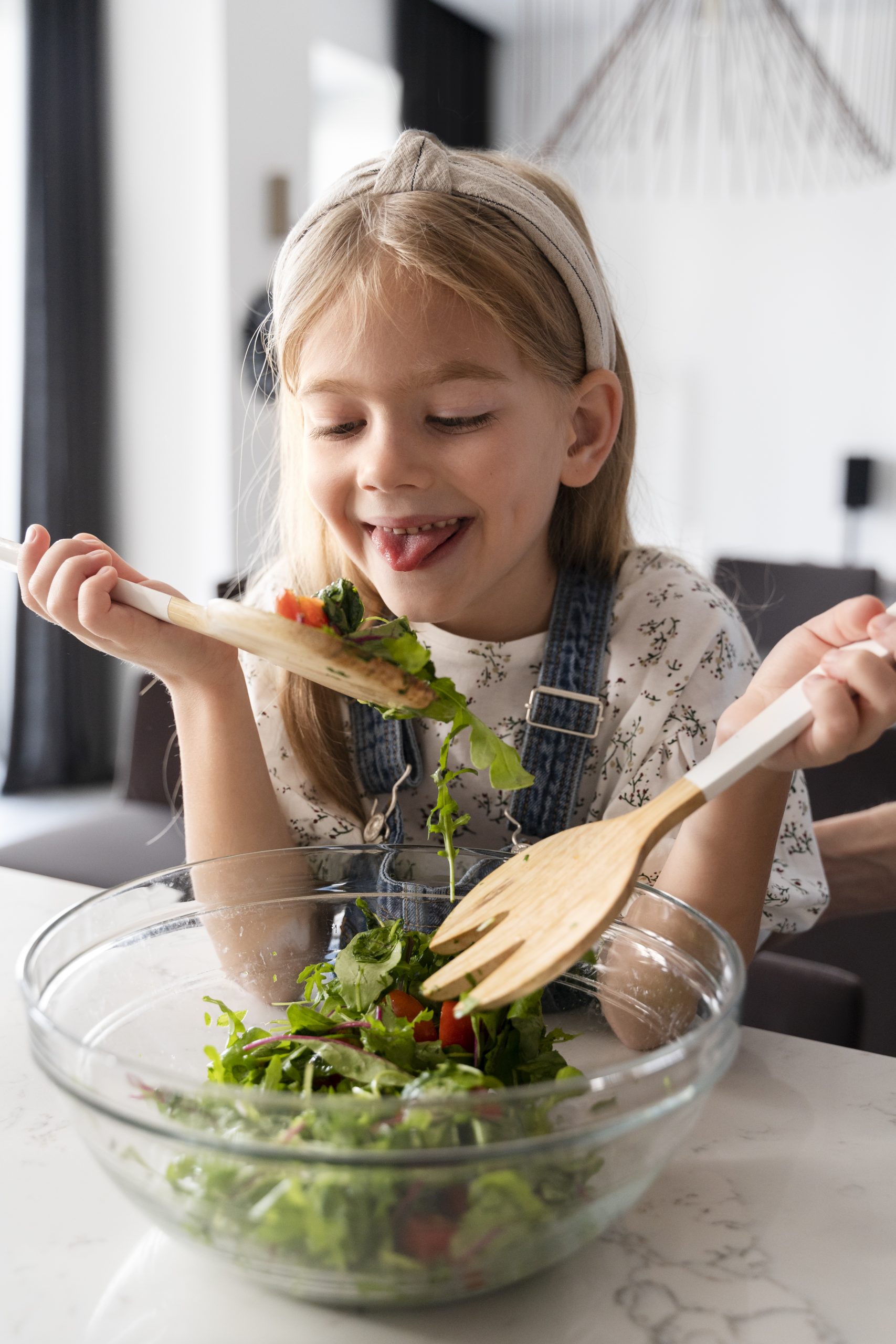
- Helping cook it
- Hearing about it
- Reading stories that include it
Every interaction builds familiarity, and familiarity builds trust.
Research: Caton et al., 2013 (American Journal of Clinical Nutrition)
3. Why pressure makes picky eating worse
It’s natural for parents to say:
“Just take one bite.”
“You won’t get dessert unless you eat this.”
“You liked it last week—just eat it!”
But research consistently shows that pressuring children reduces their willingness to try new foods and increases picky eating in the long run.
Pressure creates stress. Stress shuts down curiosity. And curiosity is one of the biggest drivers of trying new foods.
Research: Galloway et al., 2006 (Appetite)
4. Positive emotional connection changes everything
What does work is building an emotional bridge between children and healthy foods.
Studies show that children are more likely to try foods when:
- They associate them with positive emotions
- They feel safe and not judged
- Their imagination is activated
- They watch characters they love enjoy the food
This is why storytelling, pretend play, cooking together, and colorful presentation are powerful tools in shaping healthy habits.
Research: DeCosta et al., 2017 (Appetite)
5. How storytelling helps picky eaters
Stories reduce fear by giving children:
- Familiar characters
- Predictable structure
- A safe world to explore new ideas
- A fun emotional experience linked to food
When a child watches a beloved character try a vegetable—and gain something magical from it—the child’s brain reframes the food from “danger” to “adventure.”
This is exactly why we created Vegetable Legends:
A picture book series that transforms vegetables into magical heroes and makes children excited to explore them in real life. Without pressure. Without bribes. Just imagination and joy.
Practical tips you can start using today
Here are gentle, research-backed ways to help your child become more open to new foods:
✔ Keep offering without pressure
Put small portions on the table regularly. Let your child explore at their own pace.
✔ Celebrate tiny steps
A smell, a lick, a touch—these are wins!
✔ Use stories to spark curiosity
Read about vegetables as characters with stories and strengths.
✔ Cook together
Kids are five times more likely to try a food they helped prepare.
✔ Make it fun
Give foods playful names:
“Power Peppers”
“Super Vision Carrots”
“Brainy Broccoli”
✔ Model the behavior
Kids imitate parents more than anyone else.
A final message for parents
If mealtime feels overwhelming, please remember this:
You’re not failing.
Your child isn’t being difficult.
You’re both on a normal developmental journey that millions of families share.
With patience, curiosity, and the right tools, you can help your child build a joyful, lifelong relationship with healthy food.
And sometimes, all it takes is the right story to open that door.